
There has been much discussion across media platforms over recent months about the proposals to fundamentally change how justice works in England and Wales and the basic fixable improvements that could be made.
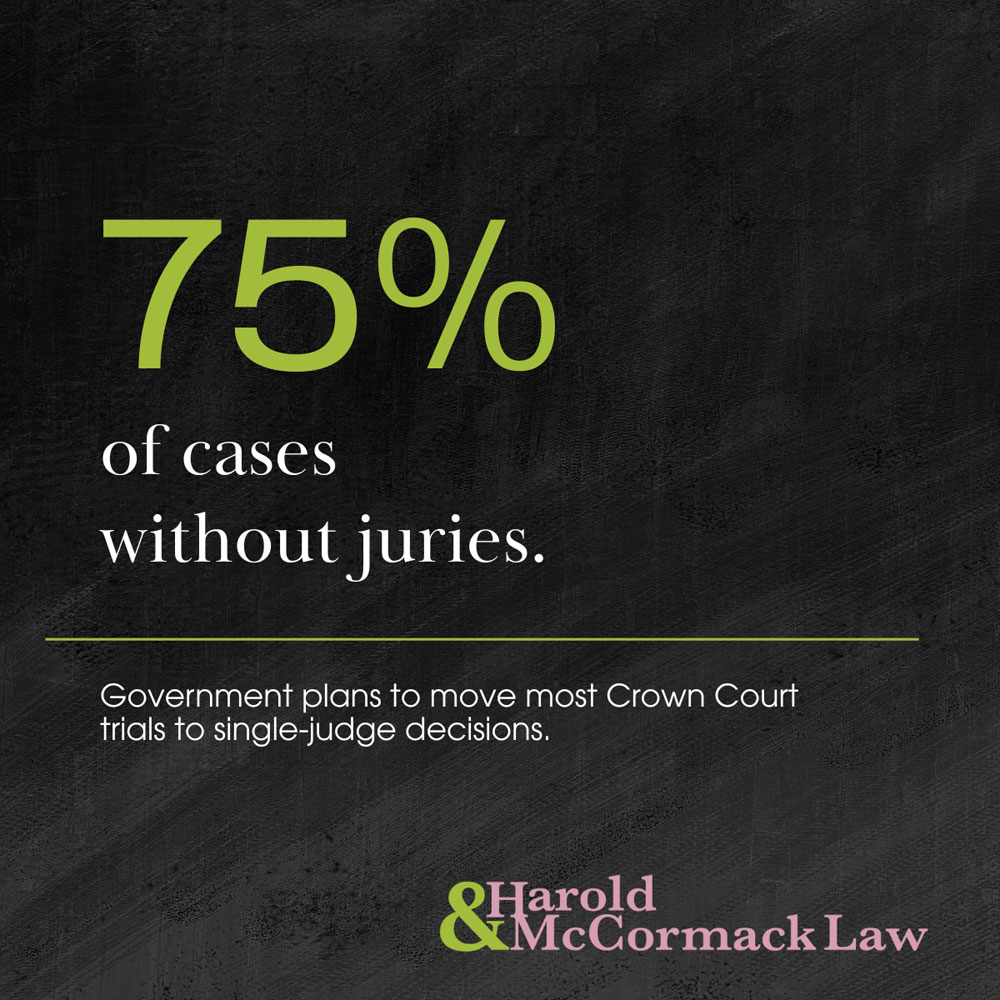
The government nevertheless appears hell-bent on moving 75% of Crown Court cases to judge-only trials. Only murder, rape, manslaughter and ‘public interest’ cases will retain juries. Fraud, robbery, health and safety offences with sentences up to three years, all to be decided by a single judge. Here’s what continues to worry me:
Diversity.
With decades of experience defending organisations and individuals in criminal proceedings, it is hard to see how the government intends to address the diversity issue.
Currently when we represent clients in jury trials, there are 12 people from different backgrounds, ages, ethnicities and life experiences. That matters when the question is was this reasonable? or involves corporate decision-making under pressure.
Now look at who’ll decide instead: 68% of judges are over 50, 61% are men, 89% are white and about a third went to private school. Fewer than 10% of new appointments come from lower socio-economic backgrounds.
We are not questioning competence or whether judges are capable of deciding cases fairly. We are questioning whether a single professional decision maker from a narrow social background can credibly be said to embody ‘community standards’ in areas of the criminal law that explicitly rely on collective social judgment.
Lammy’s U-turn.
In 2020, David Lammy wrote a review finding jury trials yielded fairer outcomes for BAME defendants, with juries as a “filter for prejudice.” He warned trials without juries were “a bad idea” that would “damage democracy.”
Five years later, he’s implementing exactly what he argued against. The reason? Backlogs. We have 78,000 cases waiting, some until 2028 or beyond.
So it would appear we’re making a constitutional change to fix a funding problem which are entirely different issues.
Health and safety prosecutions, fraud and environmental offences involve complex corporate structures, board decisions under pressure and questions about what was ‘reasonably practicable’.
Juries understand how businesses operate. They’ve dealt with competing priorities and resource constraints. A judge – however experienced in law – may lack that practical perspective.
Our take:
The backlog is a crisis. But the solution is to fund the system correctly to fix the infrastructure and operational failings, provide more courtrooms and staffing – not to dismantle a constitutional safeguard from Magna Carta.
We’re told this aligns with Europe. But most use panels of judges and lay assessors rather than single judges.
We’ve defended clients where 12 ordinary people reached a fairer verdict than a judge alone might have. That matters when someone’s life or business is on the line.
The right to be tried by your peers is a fundamental check on state power.
Once we give it away to solve a temporary funding crisis, we won’t get it back.