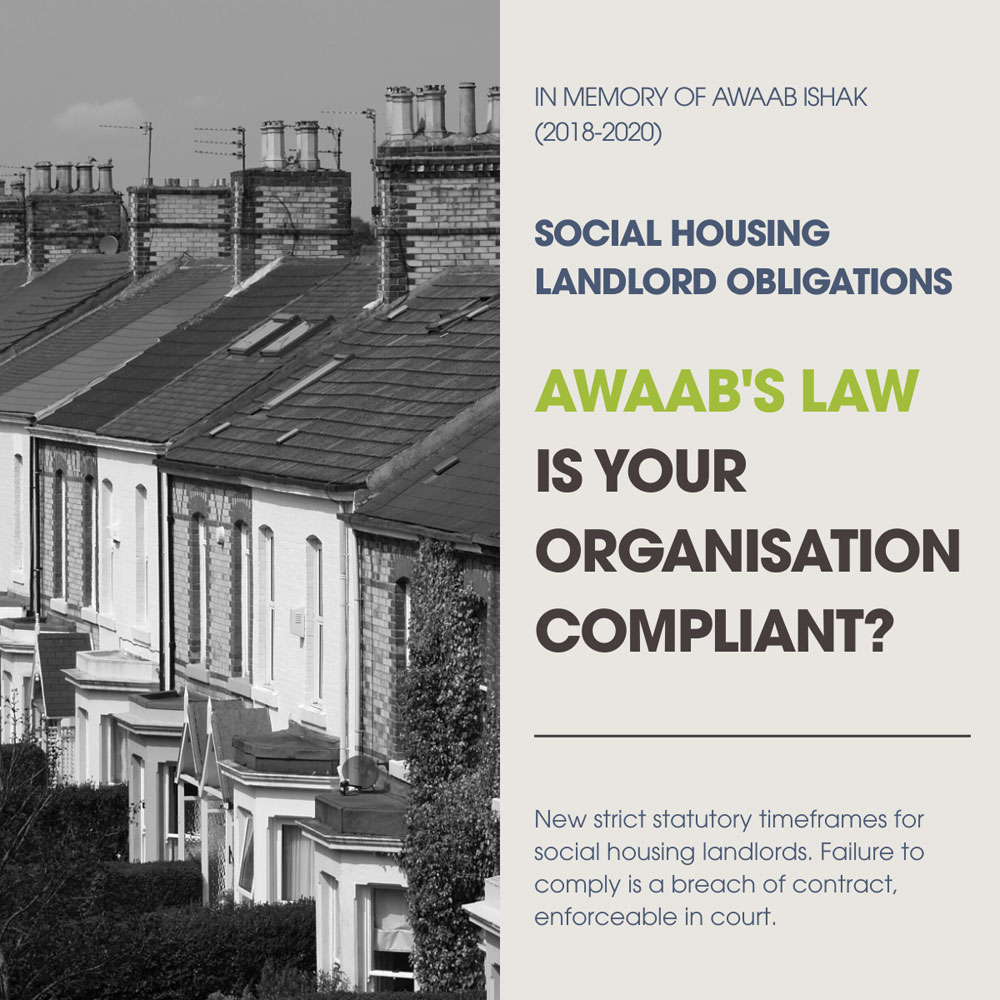
Awaab’s Law came into force on 27 October 2025. Is your organisation prepared?
Two-year-old Awaab Ishak died in 2020 after prolonged exposure to mould in his social housing. Despite repeated reports, no action was taken for three years.
Now, social housing landlords face strict statutory timeframes: 24 hours for emergency hazards, 14 days for investigations and 7 days to remedy significant health risks. Failure to comply is a breach of contract, enforceable in court.
Following years advising on corporate manslaughter and health and safety prosecutions, we see three critical risks:
Criminal exposure. Where systemic failures lead to serious harm or death, expect HSE investigations and potential Corporate Manslaughter Act prosecutions. Awaab’s Law creates clear statutory obligations; breaching them in circumstances causing harm will attract intense scrutiny.
Operational crisis. The 24-hour emergency response requirement demands robust systems and adequate resources. In critical incident management, preparedness is everything. Many landlords are not ready.
Director liability. In health and safety prosecutions, individuals are regularly charged alongside corporate entities when failures trace to boardroom decisions. The regulator can impose unlimited fines and tenants now have direct contractual remedies.
Key questions for boards: Do we have the resources to meet these obligations? Are our systems fit for purpose? What’s our plan if we can’t remedy a hazard within the statutory timeframe?
This legislation expands in 2026 to cover fire safety, electrical hazards, structural risks and more. The regulatory landscape is tightening.